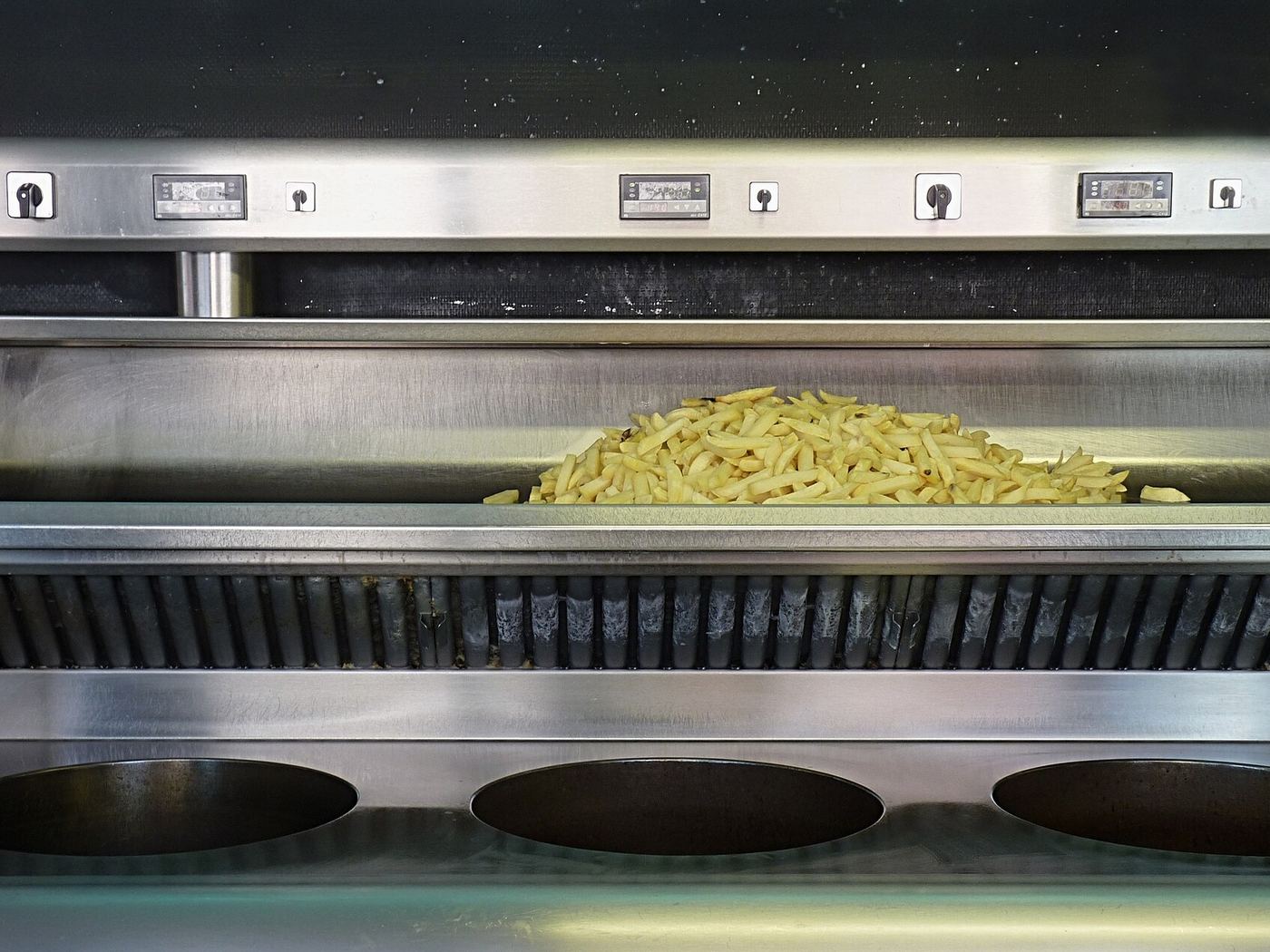
- Pick what you need and give your kitchen's ZIP code.
- Each service goes to the number of local companies you choose, from one to five. We check licenses where the law requires one and email you their names.
- You talk with them and decide. You hire and pay the company directly.
Photo: Jamain, CC BY-SA 3.0, via source.

Facts checked 2026-11-15.
Delis, pizza shops, diners and bars across New York run fryers every day. The buyer chooses an oil capacity, a fuel and a filter setup. A fryer also puts the most grease under the hood of any appliance on the line, so it is the item most likely to touch the exhaust and suppression work.
1. Kinds, sizes and fuel
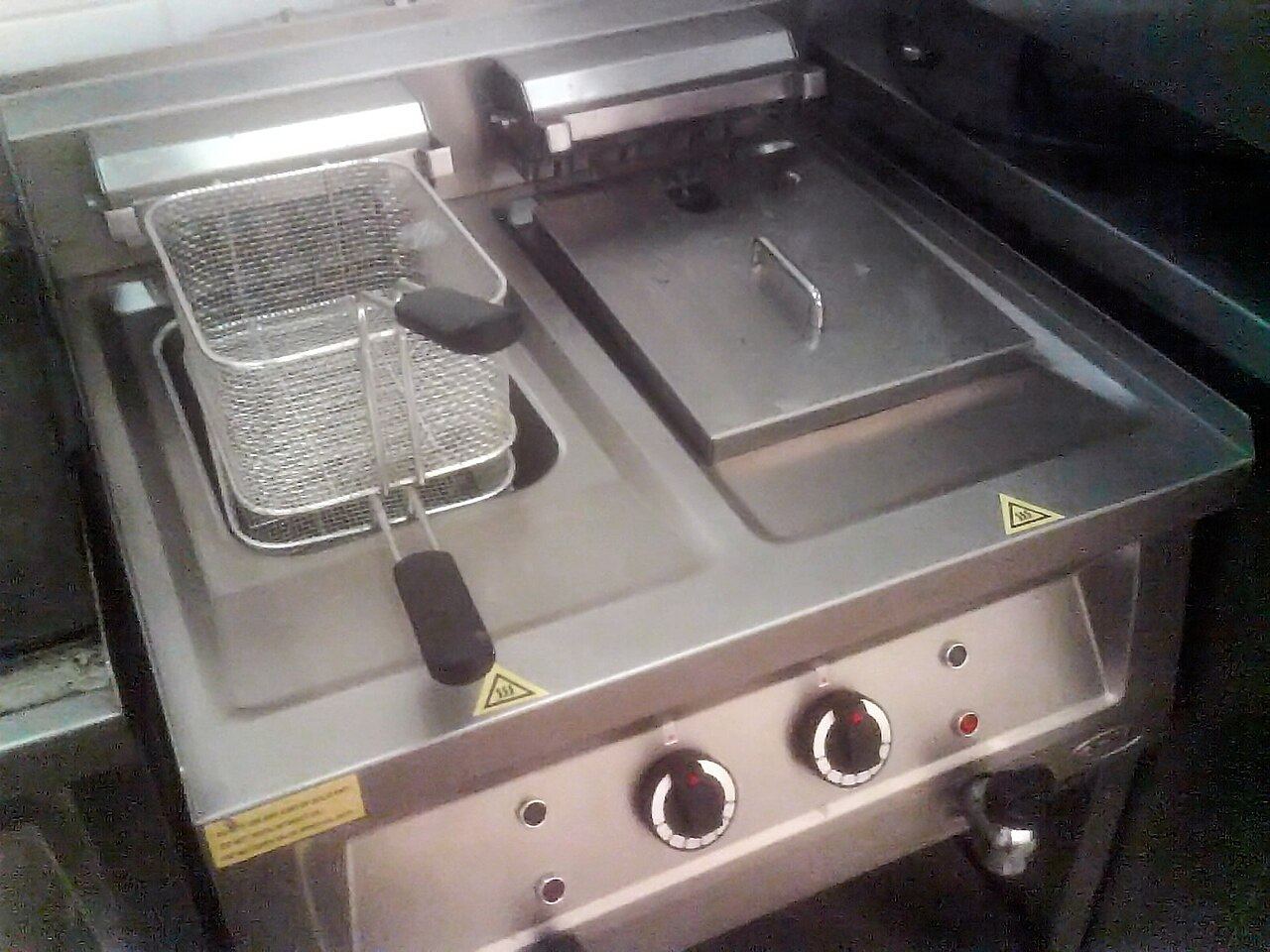
Size is stated as pounds of oil in the tank. Pitco's gas economy line runs 35 to 90 pounds of oil at 70,000 to 150,000 BTU per hour. Vulcan's 70 pound gas floor fryer is rated at 150,000 BTU per hour, with one stainless tank and a five-year tank warranty. The Dean GF14 holds 40 pounds, takes 100,000 BTU per hour and runs on natural gas or LP.
ENERGY STAR groups open deep-fat fryers by pot size, with standard units at 12 to under 18 inches and large vats at 18 to 24 inches. Countertop and floor models both count.
Pitco, Vulcan and Dean are among the makers of fryers.
2. What New York checks
Outside the five boroughs the State Sanitary Code applies, 10 NYCRR Subpart 14-1, and the county or district health office reviews plans under section 14-1.191. A fryer is one of the items such plans can list. Section 14-1.175 says hoods and ventilation devices have to stop grease or condensation from collecting on walls or ceilings, and that new or heavily remodeled places use mechanical ventilation where fumes arise.
Section 14-1.91 does not name NSF. Suffolk's guide asks for NSF approved or equivalent equipment and says appliances that make grease or condensate go under an exhaust hood with grease filters. NSF/ANSI 4 names fat and oil fryers and filters in its scope, and UL's guide says gas fryers are tested to ANSI Z83.11 / CGA 1.8 and electric ones to UL 197.
A fryer needs a Type I hood. The 2025 Fire Code of New York State (606.2) requires one over appliances that make grease vapors, the Mechanical Code (507.2.8) calls for grease filters listed to UL 1046, and the same code (507.2.11) calls for an approved automatic suppression system. Fire Code 904.14.5.1 says that when the cooking media or the equipment changes in an existing system, the suppression system has to be brought up to the current rules. Before a fryer is added or moved, read the hood and exhaust guide and ask whether the fire suppression system covers it.
In New York City the state code does not apply. FDNY's Fire Code 609 makes it unlawful to run a cooking appliance that makes grease vapors without an FDNY permit, filters, and approved exhaust and suppression systems. FDNY adds that a licensed master fire suppression piping contractor handles suppression work, and that grease in the exhaust is a common reason restaurants fail the annual inspection.
Get prices for this item. One request, and you pick how many sellers quote it.
Get quotes3. Energy use and rebates
ENERGY STAR requires gas fryers to reach 50 percent cooking efficiency and electric fryers 80 percent, with an idle energy limit. Closed vat fryers and vats under 12 or over 24 inches are out. The federal rules in 10 CFR Part 431 have no fryer section.
For fryer rebates, look up your ZIP code in the ENERGY STAR Rebate Finder and call your utility.

4. What to ask a seller
- How many pounds of oil does the tank hold, and what is the BTU input?
- Does it run on natural gas or propane?
- Is filtering built in, or is there a separate filter unit within reach?
- Is the model ENERGY STAR certified, and does it carry the NSF mark?
- What suppression system sits in the hood now, and does it cover this fryer's size and position?
- What are the cabinet width and depth on the spec sheet?
- What does the tank warranty say?
When you submit a request for a fryer, it is passed to the number of local sellers you pick, one to five.

Other kitchen equipment
Questions
Does a commercial fryer need a hood in New York?
A commercial fryer needs a Type I hood, since it makes grease vapors. The state Fire Code requires the hood and the Mechanical Code requires an approved suppression system under it.
Do I have to update my suppression system for a new fryer?
A new fryer may change what the suppression system must cover, so ask the company that services it. Fire Code 904.14.5.1 says a change in cooking media or equipment brings the system up to the current rules.
How big a commercial fryer do I need?
A commercial fryer is sized by pounds of oil, and the gas floor models listed here run from 35 to 90 pounds. Match the tank to your menu and your busiest hour, then read the spec sheet.
Is there an ENERGY STAR commercial fryer?
An ENERGY STAR commercial fryer exists for open deep-fat models in standard and large vat sizes. The cooking efficiency floor is 50 percent for gas and 80 percent for electric.
Sources
- 10 NYCRR 14-1.191, plans for food service
- 10 NYCRR 14-1.175, ventilation
- 10 NYCRR 14-1.91, equipment materials
- Suffolk County plan review guide
- 2025 Fire Code of New York State
- 2025 Mechanical Code of New York State
- NYC Fire Code, chapter 6
- FDNY Restaurant Fire Safety Guide
- UL, Commercial Cooking Marking and Application Guide
- NSF/ANSI 4 scope notice
- ENERGY STAR, commercial fryers
- ENERGY STAR Rebate Finder
- Pitco gas economy fryers
- Vulcan 70 lb gas floor fryer
- Dean GF14 gas fryer