- Pick what you need and give your kitchen's ZIP code.
- Each service goes to the number of local companies you choose, from one to five. We check licenses where the law requires one and email you their names.
- You talk with them and decide. You hire and pay the company directly.
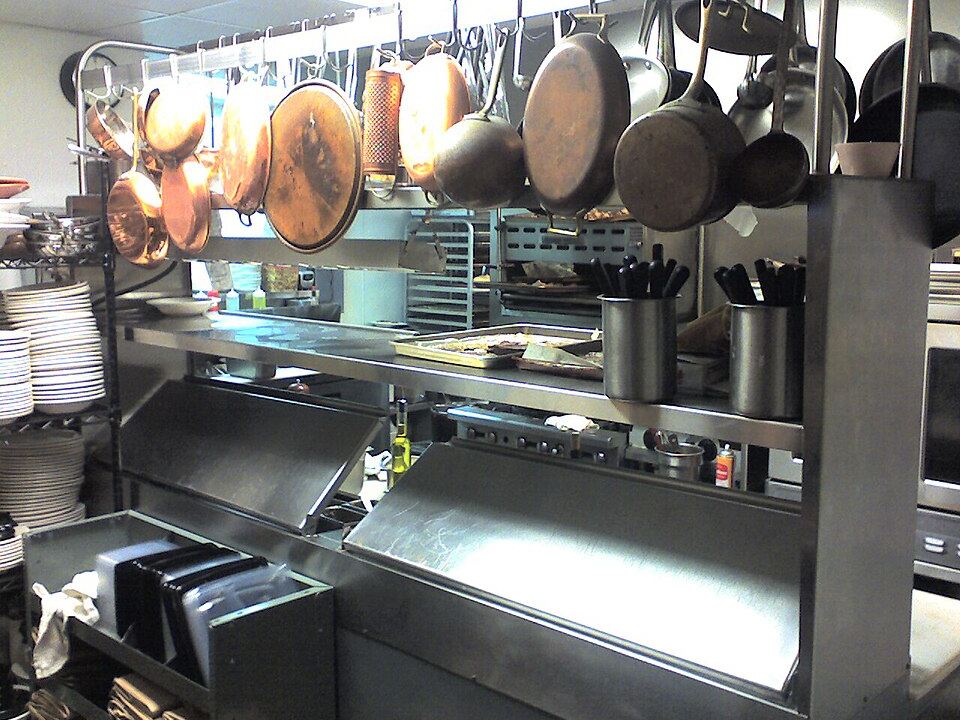
Photo: Cuvala1, CC BY-SA 3.0, via source.

Facts checked 2026-11-15.
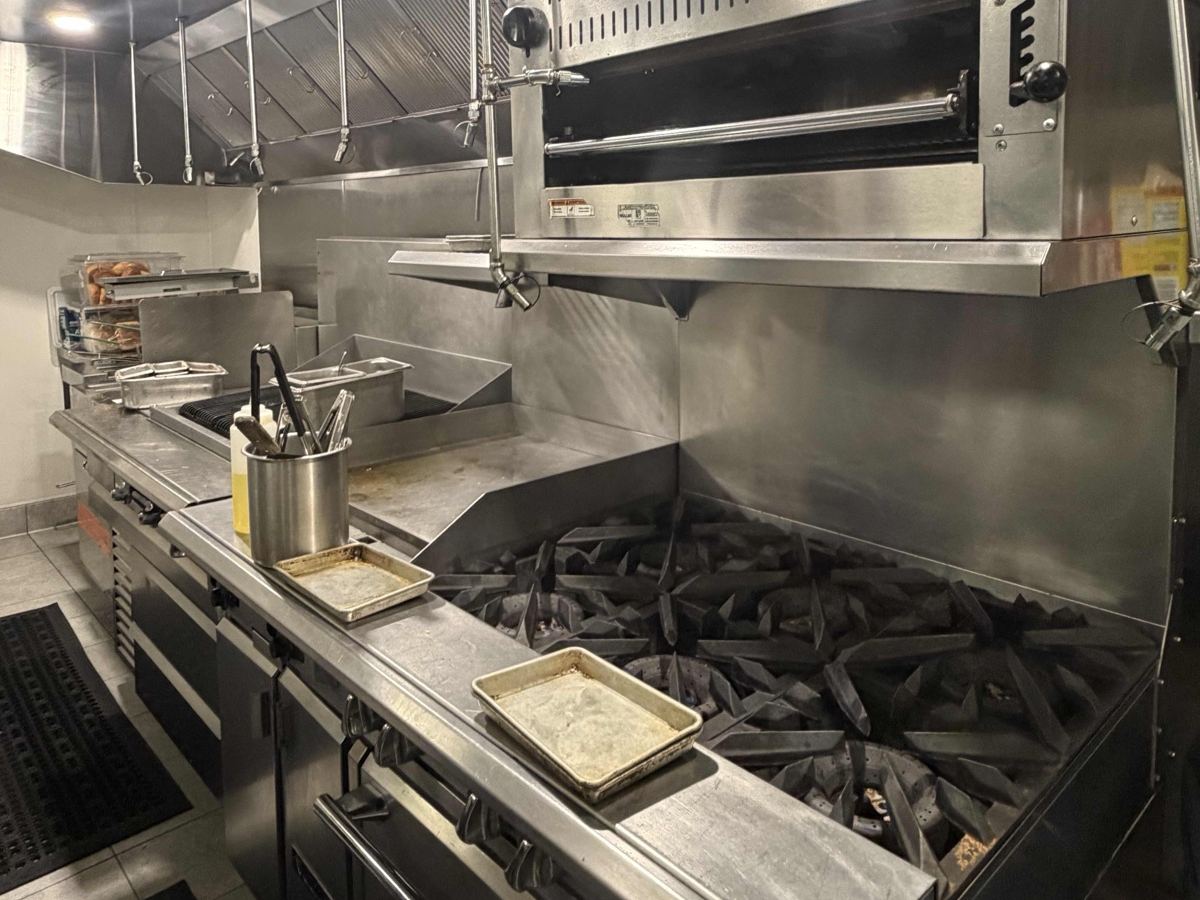
A range is the workhorse of a line: burners on top and an oven or storage below. Whoever buys one chooses a width, a top, a base and a fuel. Because a range sits under a hood, the choice also reaches the fire suppression system above it.
1. Kinds, sizes and fuel
Vulcan lists 82 ranges, gas and electric, from 12 to 72 inches wide, with 2 to 12 burners on the gas units. Tops include open burners, a griddle, a French top, a charbroiler and a hot top. The base can hold a standard oven, a convection oven, a cabinet or a refrigerated drawer.
Burners are rated in BTU per hour. Three Vulcan series use 28,000, 30,000 or 35,000 per burner. A Garland 36-inch range has six 30,000 BTU burners and totals 230,000 BTU with its oven, on natural gas or propane. Southbend's range catalog has four series, and its page can be sorted to show only gas or only electric.
Vulcan, Garland and Southbend are among the makers of commercial ranges.
2. What New York checks
Outside New York City, food service falls under the State Sanitary Code, 10 NYCRR Subpart 14-1, and a county or state district health office issues the permit. It is not the FDA Food Code. Section 14-1.191 lets the permit-issuing official ask for plans showing layout, equipment, plumbing and ventilation before construction or a major renovation, so the range goes on the plan. Section 14-1.91 asks for nontoxic, durable, nonabsorbent equipment materials and bars painted food-contact surfaces.
The pages for 14-1.91 and 14-1.95 do not mention NSF. County guides do. Suffolk's plan review guide asks for commercial grade equipment that is NSF approved or equivalent. NSF/ANSI 4 covers ranges, ovens and broilers, and UL's guide says gas-fired units are tested to ANSI Z83.11 / CGA 1.8 and electric ones to UL 197.
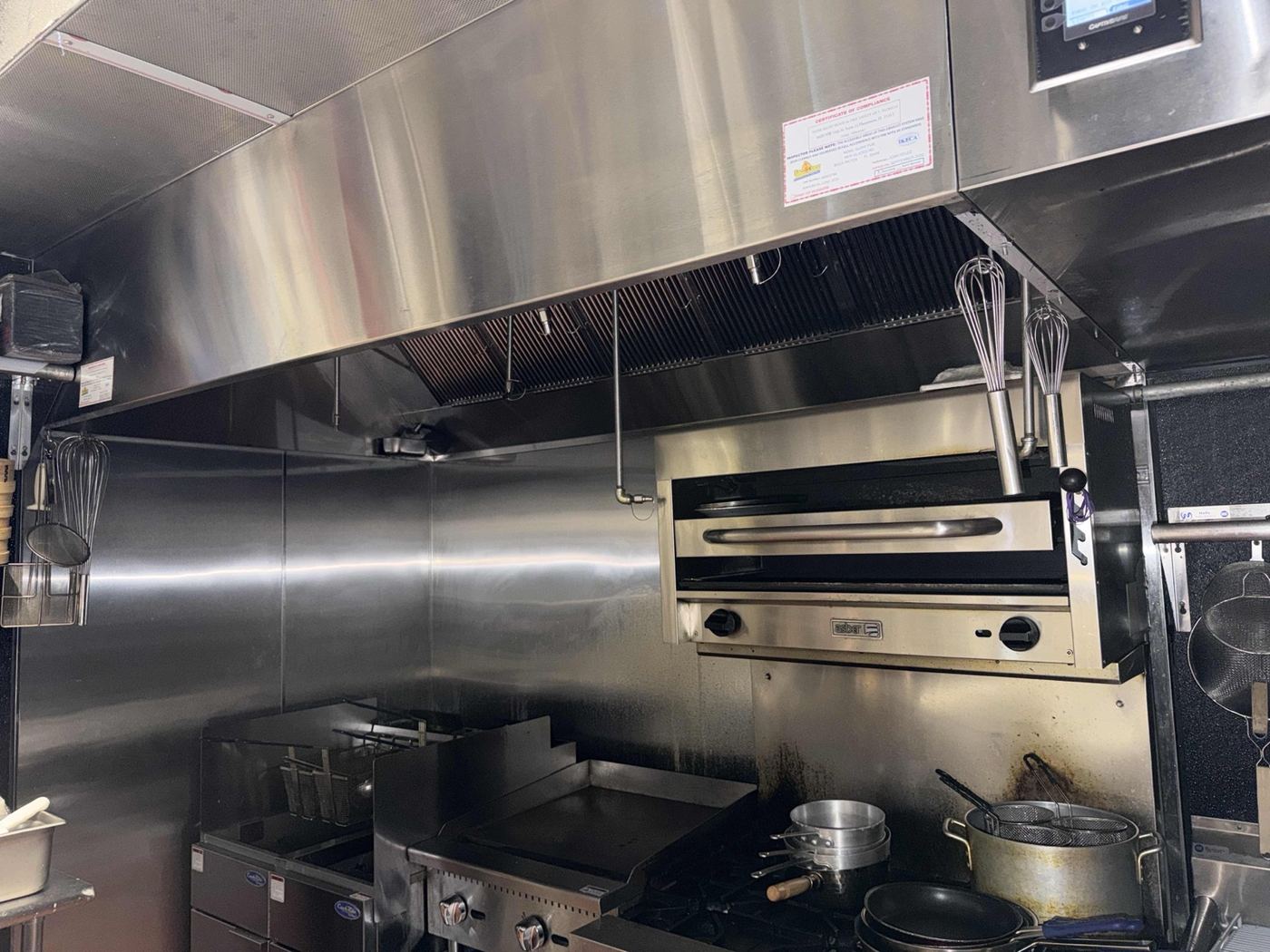
A range that makes grease vapors goes under a Type I hood. The 2025 Fire Code of New York State (606.2) requires that hood, and the Mechanical Code (507.2.11) adds an approved automatic fire suppression system. If you change the equipment under an existing system, Fire Code 904.14.5.1 says the suppression system must be brought up to the current rules. Check the hood and exhaust guide first, then ask about the fire suppression system before the range is ordered or moved.
In New York City the state code does not apply. FDNY's Fire Code 609 bars running cooking equipment without an FDNY permit, an approved suppression system and an approved exhaust system, and FDNY says any change to a cooking system needs its approval. For gas ranges, the city's MyCity page names a licensed master plumber for the gas piping and says the utility will not start gas until the city's inspections clear.
Get prices for this item. One request, and you pick how many sellers quote it.
Get quotes3. Energy use and rebates
ENERGY STAR has no category for gas ranges. Its commercial cooktops category covers electric cooktops and electric ranges, including induction, open coil, French top and hot top, at a cooking efficiency of at least 80 percent. Gas ranges are listed as ineligible. The federal rules in 10 CFR Part 431 have no section for commercial ranges.
Enter your ZIP code in the ENERGY STAR Rebate Finder and ask your electric or gas company's business office.
4. What to ask a seller
- What is the total BTU per hour, and is the unit set for natural gas or propane?
- Is the base a standard oven, a convection oven or an open cabinet?
- Does the model carry the NSF mark and a gas or electric listing mark?
- What are the width and depth, and how wide is the hood above the spot where it will stand?
- Does the range ship on legs or casters, and what gas connector does the maker call for?
- Which suppression system does the hood have now, and does it cover the new top?
- What does the maker's warranty page say for this exact model?
Send one request for a range and it goes to as many local equipment sellers as you pick, from one to five.
Other kitchen equipment
Questions
Does a commercial range need a hood in New York?
A commercial range needs a Type I hood when it makes grease vapors, under Fire Code 606.2 of the 2025 state code. In New York City, FDNY's Fire Code 609 requires an approved exhaust system and an operating permit for the cooking system.
Can I put a new range under my old hood?
A new range can go under an old hood only if the hood and its suppression system fit the new appliance. Fire Code 904.14.5.1 says a change in the equipment under an existing system brings the suppression system up to the current rules, so ask the fire code office.
Is there an ENERGY STAR commercial range?
An ENERGY STAR commercial range exists only for electric models, listed under commercial cooktops with a cooking efficiency of at least 80 percent. Gas ranges are not eligible.
Does New York require NSF equipment?
Subpart 14-1 does not name NSF listing for restaurant equipment. Some county health offices, such as Suffolk, ask for NSF approved or equivalent equipment, so ask the office that issues your permit.
Sources
- 10 NYCRR 14-1.191, plans for food service
- 10 NYCRR 14-1.91, equipment materials
- Suffolk County plan review guide
- 2025 Fire Code of New York State
- 2025 Mechanical Code of New York State
- NYC Fire Code, chapter 6
- MyCity, gas authorization for restaurants
- UL, Commercial Cooking Marking and Application Guide
- NSF/ANSI 4 scope notice
- ENERGY STAR, commercial cooktops
- ENERGY STAR Rebate Finder
- Vulcan ranges
- Garland US Range 36 inch gas range
- Southbend commercial ranges